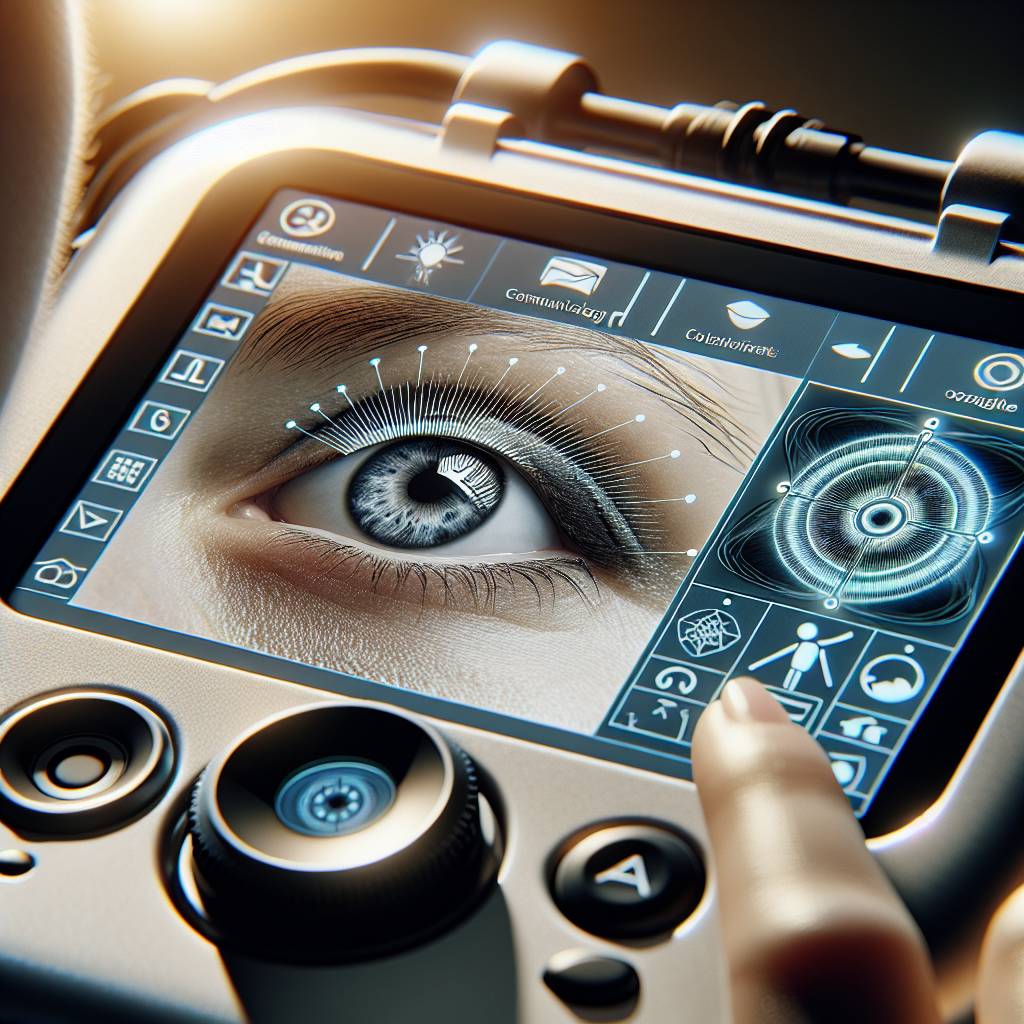
Eye gaze technology ALS presents a breakthrough in assistive communication for patients suffering from ALS (Amyotrophic Lateral Sclerosis). This innovative technology opens doors to the world of communication for people who have lost their speech and motor function due to this neurodegenerative disease. This article explores the top AAC (Augmentative and Alternative Communication) devices incorporating eye gaze technology, offering effortless communication to ALS patients.
Understanding Eye Gaze Technology ALS
Eye gaze technology ALS refers to systems embedded in AAC devices. The technology uses a camera and infrared light reflected from the eyes to determine where a patient is looking. These eye gaze movements essentially function as a computer mouse, enabling the patient to navigate and select words or letters on the communication board.
Patients with conditions like ALS, where speech and physical motions become limited or lost, find this technology life-changing. It allows them to express their thoughts, needs, and emotions, thereby improving their overall quality of life.
Benefits of Using Speech Generating Devices ALS
Speech generating devices ALS are specialized AAC tools that help individuals express themselves verbally. These devices do not require the person to have speech abilities. They rely on various input methods, including eye gaze technology, to provide a voice output.
Here’s why speech generating devices are essential for people with ALS:
Providing A Platform For Communication
These devices offer a medium for patients to share, connect, and interact with others around them. They combine technology and strategy to replace or support natural spoken language.
Facilitating Independence
These devices go beyond communication,. They also assist with daily activities like controlling the home environment, access to computer, and even telephone calls, promoting a sense of self-reliance in ALS patients.
Improving Emotional Wellbeing
These devices aid in expressing not just basic needs, but also desires, feelings, and individual personality traits. They help maintain relationships, allowing users to vent, love, and laugh – overall, enhancing their emotional health.
Eye Gaze Technology in AAC for ALS
Implementing eye gaze technology in AAC is a revolutionary step towards improving the lives of ALS patients. Here are a few notable AAC devices that employ eye gaze technology:
Tobii Dynavox I Series
This series delivers unwavering speed and accuracy in eye tracking and control. It allows users to take control of their environment, access the internet, make phone calls, and change TV channels with their gaze, making it an ultimate communication tool.
EyeTech TM5 Mini
Compact yet efficient, the EyeTech TM5 Mini offers high precision eye tracking. It’s a portable AAC device allowing users to communicate wherever they are.
PCEye Mini
PCEye Mini by Tobii Dynavox offers more than just communication. It supports independence by integrating with home automation systems and also aids in recreational activities.
Grid Pad Eye
Grid Pad Eye is a portable, robust AAC device that can withstand accidental drops. It comes with various communication tools and eye gaze cameras.
Conclusively, integrating eye gaze technology in AAC devices has transformed the way ALS patients communicate. These tools have reestablished their connection to the world, giving hope, dignity, and independence back into their lives.
We invite you to explore more about powerful technologies like this within our articles section. If you have any concerns or questions regarding your ALS and Real Water cases, we encourage you to go to the contact page on our site. For more information and help, please call us at 702-385-6000. Let’s explore the possibilities together.