Hoyer lift ALS is an essential tool for ALS patients who struggle with mobility in their daily living activities. This equipment can assist in safe, effortless transfers from the bed to the wheelchair, chair to the bathroom, and more. Imagine the independence and tranquility one could experience with the help a Hoyer lift ALS provides. However, acquiring and using a Hoyer lift can seem slightly complex. This exclusive guide aims to unravel these complexities, leaving you well-informed about this empowering solution.
Essential Insights into ALS
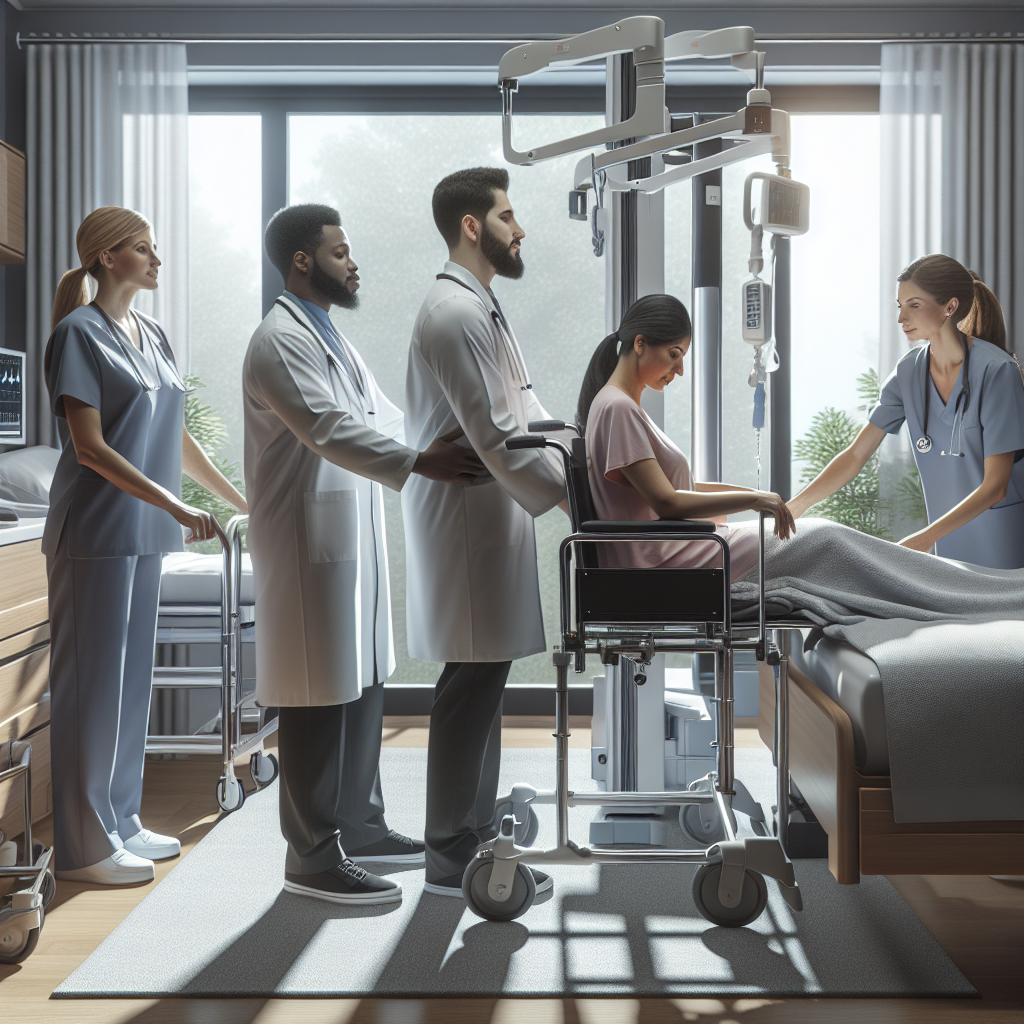
Firstly, let’s explore a bit about Amyotrophic Lateral Sclerosis (ALS), a debilitating neurodegenerative disease. ALS impacts nerve cells in both the brain and the spinal cord. Over time, it takes away the ability to control muscle movement, essentially locking a person into their own body while their mind remains completely unaffected ALS Association.
As the disease progresses, mobility becomes increasingly challenging. This is where assistive tools like the Hoyer lift come into play.
What is a Hoyer Lift ALS?
A Hoyer lift is a mechanical device designed to provide safe, effortless transfers of patients from one location to another, such as from a bed to a wheelchair. This is accomplished via a sling which is placed under the individuals and then hoisted by the lifting device.
Where immobility places limits, Hoyer lift ALS breaks barriers. It ensures patients’ comfort, dignity, and safety while providing caregivers with the assistance they need. Using these lifts significantly reduces the risk of falls and injuries during transfers Mayo Clinic.
The Superiority of the Ceiling Lift
Equivalent to, yet in many ways, surpassing the Hoyer lift ALS, is the Ceiling lift. It is mounted on a track system on the ceiling (permanently or semi-permanently), allowing for secure transfers in specific routes within the home.
Perhaps its most significant advantage is the increased floor space. Unlike traditional floor-based lifts, a ceiling lift does not have a base that occupies floor space. For many ALS patients and caregivers, a ceiling lift makes transfers stress-free and less time-consuming.
A ceiling lift also enables smoother, quieter, and continuous trips without the bumping or jerky movements often associated with manual or semi-electrical hoists Invacare Corporation.
Choosing Between a Hoyer Lift ALS and a Ceiling Lift
Each type of lift has its pros and cons, and deciding on the right solution depends on the patient’s unique circumstances and needs. Importantly, both lifts have a primary goal in common: ensuring safe transfers for the ALS patient.
Evaluating and comparing the features of the Hoyer lift ALS and the ceiling lift side by side can help you make an informed decision. An ALS caregiver or healthcare provider can provide valuable advice based on extensive experience.
Final Thoughts and Your Next Steps
The benefits of a Hoyer lift ALS or a ceiling lift are significant for both the ALS patient and the caregiver. By ensuring safe transfers, these lifts improve the quality of life for everyone involved.
Equip yourself with as much knowledge as possible, consult with medical professionals, and make an investment in the right lift that suits your specific situation.
We’re here to help along your journey. For more in-depth information or to–peacefully and confidentially–discuss your ALS and Real Water case, we invite you to reach out at the alsrealwaterlasvegas.com website’s /contact page. To explore more related content, please visit our website’s /blog page. For immediate assistance, don’t hesitate to call 702-385-6000.
References:
– The ALS Association – What is ALS
– Mayo Clinic – Choosing Mobility Aids
– Invacare Corporation – Maxi Sky 600